



Buying a townhome in Atlanta can offer a practical mix of convenience, community amenities, and less exterior maintenance. But before making an offer, it is important to understand what the homeowners association (HOA) charges, what those fees cover, and how the association manages its finances.
Atlanta townhome HOA fees can significantly affect your monthly housing budget. Two properties with similar prices may have very different ownership costs because of their association dues, maintenance responsibilities, insurance requirements, and community rules.
Whether you are searching for an Atlanta townhome for sale in Midtown, Buckhead, West Midtown, or the surrounding suburbs, understanding these costs will help you make a more informed decision.
The Basics of Townhome Associations
Atlanta townhome HOA fees are mandatory monthly or annual payments made by residents to cover the maintenance of shared spaces, exterior building repairs, community amenities, and master insurance policies. Understanding these fees is crucial, as they directly impact your monthly housing budget and overall Atlanta townhome costs.
What Do Atlanta Townhome HOA Fees Actually Cover?
Exterior and Common Area Maintenance
One of the biggest advantages of paying townhome HOA costs in Atlanta is the potential for a lower-maintenance lifestyle. Depending on the association's responsibilities, your dues may cover landscaping, roof repairs, exterior painting, gutter maintenance, private road upkeep, and shared parking areas.
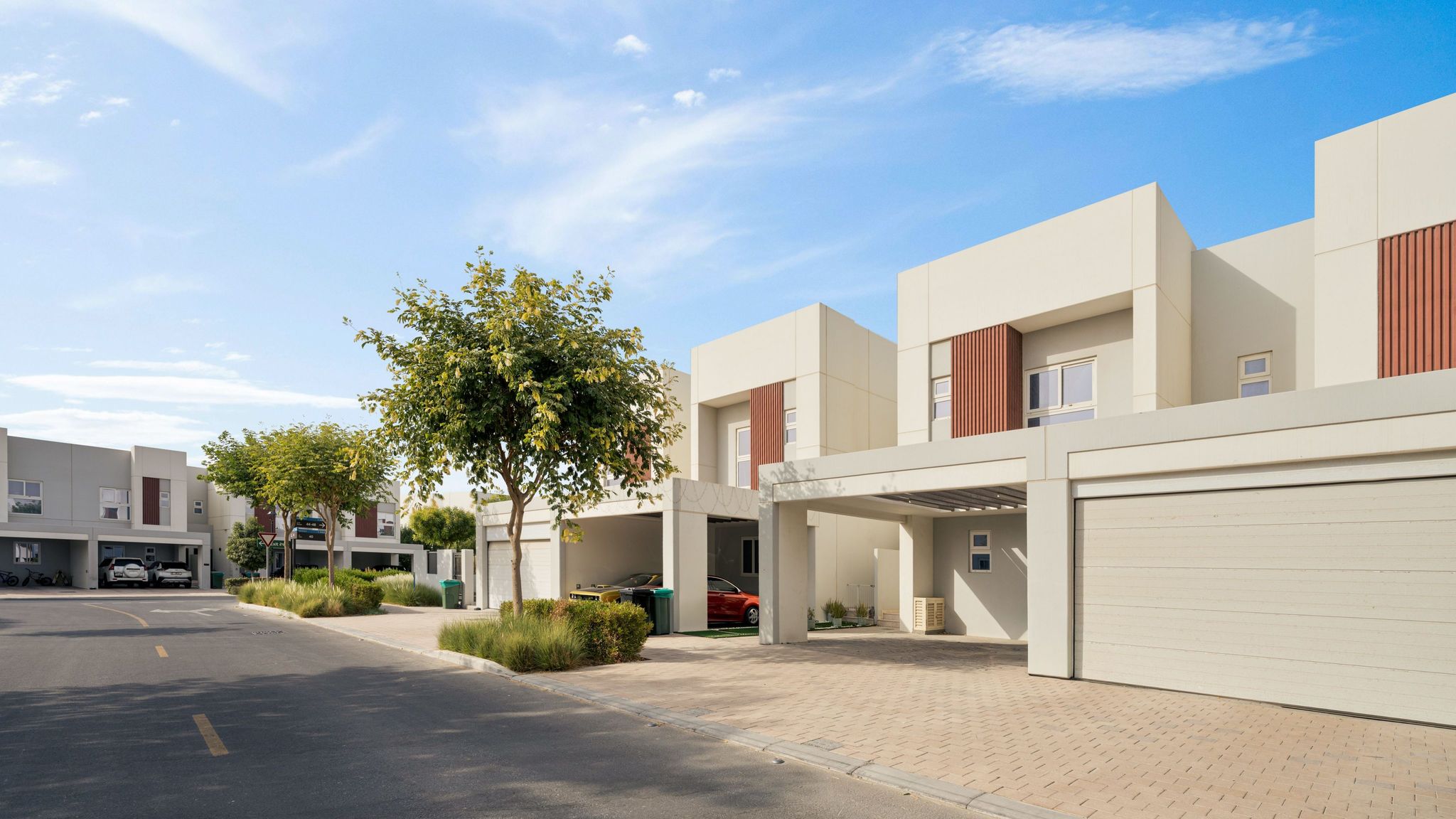
This arrangement can make homeownership more convenient, particularly for busy professionals or buyers who travel frequently.
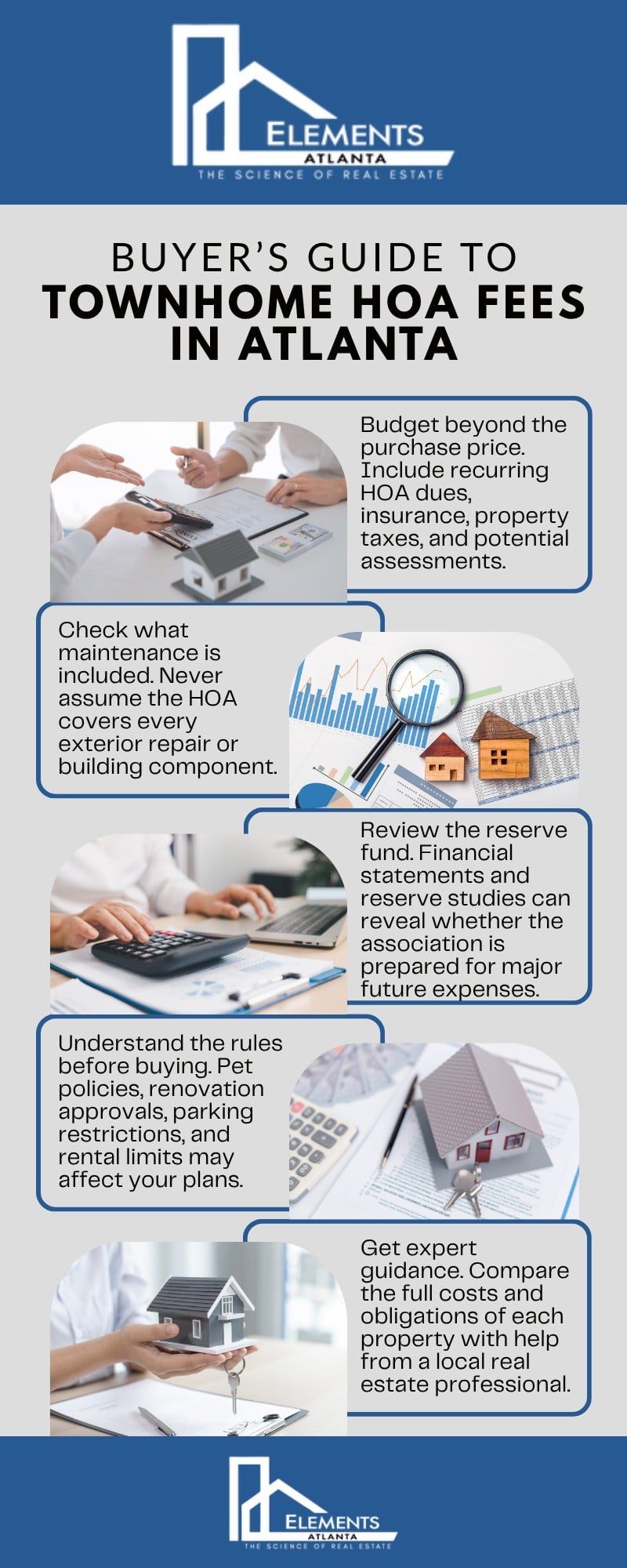
However, exterior maintenance is not automatically included in every HOA fee. Some associations require homeowners to maintain their own roofs, windows, patios, or other exterior components. Review the maintenance provisions in the governing documents before assuming a repair will be covered.
Well-maintained common areas can also support the community's overall appeal. The benefit depends on the association's ability to fund and carry out necessary work.
Community Amenities and Insurance
When evaluating an Atlanta townhome for sale, consider whether the amenities justify the ongoing expense. Depending on the development, dues may help fund swimming pools, fitness centers, gated entrances, walking paths, dog parks, or clubhouses.
Amenities can add convenience, but buyers should consider how frequently they will actually use them.

Insurance is another important expense. An association may maintain a master insurance policy covering certain shared structures, common areas, or portions of individual buildings. The scope of coverage varies, so do not assume the policy protects everything inside your home.
You may still need an individual homeowners insurance policy to cover personal belongings, interior finishes, liability, and other items excluded from the master policy. Ask an insurance professional to clarify the coverage you need and whether the association's policy includes significant deductibles that could affect owners.
Evaluating Atlanta Townhome Costs and Financial Health
The Importance of the Reserve Fund
Monthly dues tell only part of the story. An HOA also needs sufficient savings to pay for major repairs and replacements without placing an unexpected burden on homeowners.
A reserve fund is money set aside for future expenses, such as roof replacement, pavement repairs, building maintenance, and equipment upgrades. A reserve study typically estimates the remaining useful life of major components and the funding needed to maintain them.

Before buying a townhome in Atlanta, ask for the latest reserve study, current reserve balance, annual budget, and available financial statements.
A well-funded reserve account can help an association manage predictable expenses. However, even a substantial balance does not guarantee that future costs are fully covered. Compare the reserve study's recommendations with the association's actual funding plan.
Beware of Special Assessments
A special assessment is an additional charge imposed on homeowners to cover expenses that regular dues or existing reserves cannot adequately fund. It may be needed after unexpected damage, a major repair, or years of insufficient saving.
For example, if a community needs extensive roof repairs and lacks sufficient reserves, homeowners could face a one-time payment or another assessment structure permitted by the governing documents.
To identify potential warning signs, review recent HOA meeting minutes, financial statements, reserve studies, and notices about planned repairs. Look for recurring budget shortfalls, deferred maintenance, insurance increases, or discussions about additional charges.
Also ask whether any special assessments have already been approved or are being considered. These expenses can change the affordability of a property even when its purchase price seems reasonable.
Navigating Atlanta HOA Rules and Regulations
Covenants, Conditions, and Restrictions (CC&Rs)
The cost of ownership is only one consideration when comparing townhomes. Association rules can also affect how you use, maintain, and modify your property.

Covenants, Conditions, and Restrictions (CC&Rs) are governing provisions that establish community requirements. Depending on the association, they may address exterior paint colors, architectural changes, landscaping, parking, noise, pets, and use of shared facilities.
Read these documents carefully before committing to a purchase. If you want to install a fence, renovate a patio, add exterior lighting, or make other changes, check whether advance approval is required.
Also, review the enforcement process and any stated penalties for violations. Understanding the rules in advance helps you determine whether the community suits your preferences and plans.
Rental Restrictions
Rental policies deserve particular attention if you may eventually lease your townhome or use it as an investment property.
Some associations limit the number or percentage of homes that may be rented, require tenant registration, establish minimum lease terms, or restrict short-term rentals. Others may have waiting lists or exceptions for certain circumstances.
There is no universal rental cap that applies to every Atlanta townhome community. Do not assume a particular percentage, such as 10% or 20%, is standard.
If rental flexibility matters to you, confirm the current restrictions in writing and ask whether the community is already at its rental limit. This is especially important if you expect your plans to change after purchasing.
Next Steps for Prospective Buyers
Requesting the Resale Package
Once you are under contract on an Atlanta townhome for sale, carefully review the association documents made available through the transaction.
Depending on the community and applicable law, these may include financial statements, the current budget, governing documents, insurance information, meeting minutes, and details about pending assessments.
Ask your real estate agent or closing professional which documents are available, what fees apply, and what deadlines govern your review. Do not assume every transaction follows the same review period or that all documents are automatically provided.
Pay particular attention to the current dues, planned increases, reserve funding, maintenance obligations, rental restrictions, and any unresolved disputes or major projects.
If something is unclear, request clarification before your contractual review deadlines expire. Where necessary, consult an attorney or insurance professional to understand specific legal or coverage questions.
Partnering with a Local Real Estate Expert
An experienced local real estate agent can help you compare communities beyond their listing prices. They can explain differences in maintenance responsibilities, identify questions to raise with an HOA, and help you evaluate how recurring dues affect your budget.
When buying a townhome in Atlanta, consider the full ownership picture: mortgage payments, property taxes, insurance, utilities, HOA dues, routine upkeep, and the possibility of future assessments.
A careful comparison can help you avoid choosing a property solely because its purchase price looks attractive.
HOA vs. Fee-Simple Townhome Comparison Table
The following comparison highlights common differences. Actual responsibilities depend on the property's legal ownership structure and governing documents.
| Feature | Typical HOA Townhome | Fee-Simple (No HOA) Townhome |
|---|---|---|
| Monthly Fees | Mandatory dues cover association services and shared expenses | No HOA dues, but individual maintenance and service costs remain |
| Exterior Maintenance | Managed by the association when included in its responsibilities | Primarily the owner's responsibility |
| Amenities | May include a pool, gym, gates, or shared green spaces | Shared amenities are less common |
| Rules & Restrictions | Subject to applicable CC&Rs and association rules | Generally fewer private association restrictions, but laws and other recorded restrictions still apply |
| Insurance | Master policy may cover certain structures or common areas; individual coverage may also be needed | Individual policy generally covers the home, subject to the property's structure and insurance requirements |
A fee-simple townhome does not necessarily mean a property has no HOA. Fee-simple describes a form of ownership, not the automatic absence of an association. Confirm both the ownership structure and any applicable community obligations before buying.
Making an Informed Atlanta Investment
Understanding Atlanta townhome HOA fees before purchasing can help you protect your budget and choose a community that fits your lifestyle. Look beyond the monthly payment to assess the association's financial health, maintenance responsibilities, insurance arrangements, and rules.
The lowest dues are not always the best value, just as the highest dues do not automatically indicate better management. What matters is whether the services, reserves, and financial planning justify the cost.
If you are comparing properties or preparing to make an offer, get professional guidance before making your final decision. Give me a call today at 404-643-2013 or email me at [email protected], and let’s start discussing your townhome search, compare HOA costs, and identify properties that fit your budget and goals.
Frequently Asked Questions
What is the average cost of Atlanta townhome HOA fees?
Are townhome HOA costs in Atlanta negotiable?
What are the most common Atlanta HOA rules I should watch out for?
Does an Atlanta townhome for sale always have an HOA?
How do special assessments affect Atlanta townhome costs?
What should I look for in the HOA documents when buying a townhome in Atlanta?
Do Atlanta townhome HOA fees cover my property taxes?
Check out this article next